

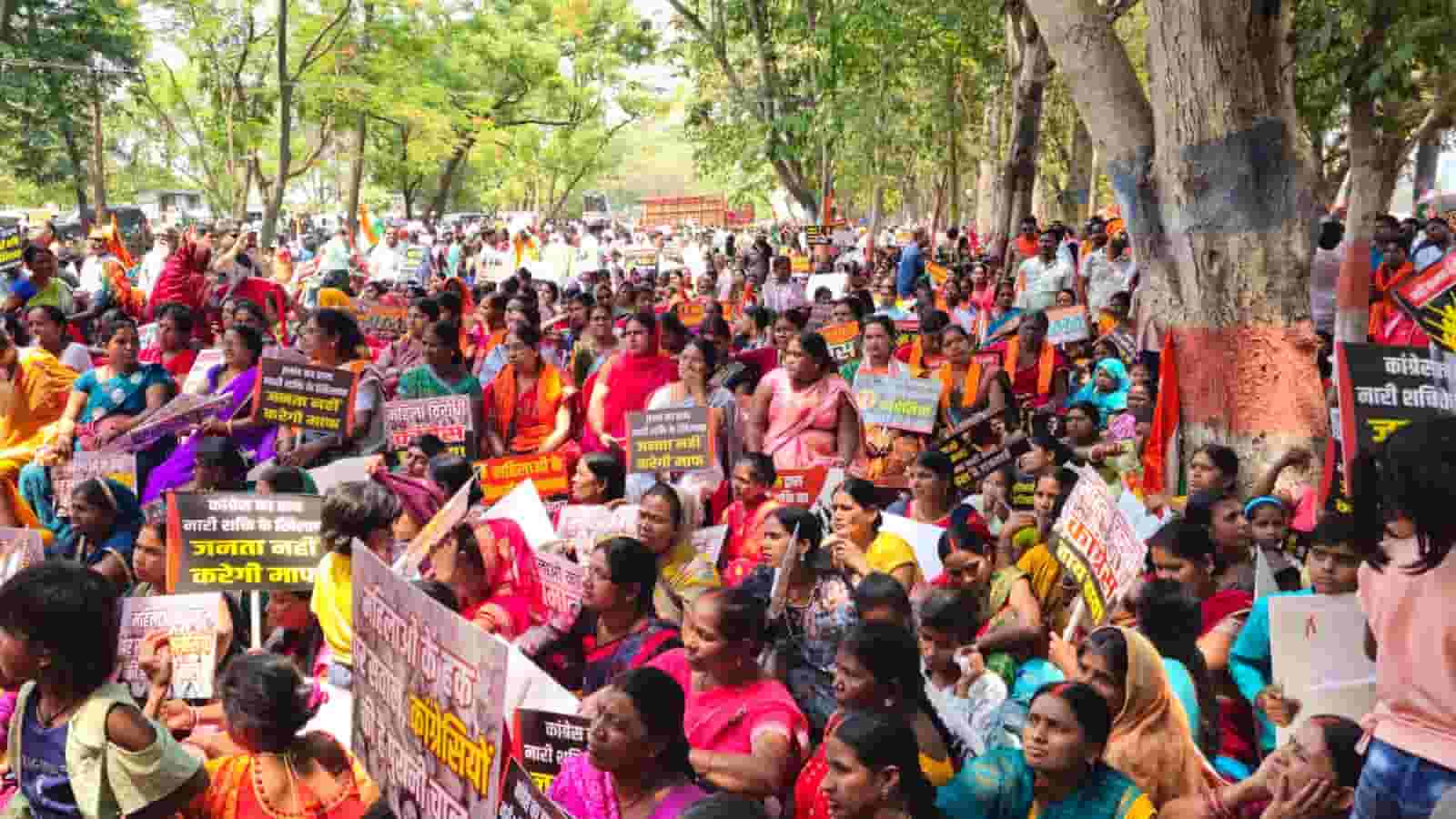
In a significant political escalation, the Bharatiya Janata Party (BJP) in Jharkhand on Saturday organized a large-scale protest march in the state capital under the leadership of Union Minister Annapurna Devi, targeting the opposition over the collapse of the Women’s Reservation Bill in Parliament.
A substantial number of BJP women workers took to the streets, voicing strong opposition against the Congress and other opposition parties. The protest comes in the wake of the bill’s failure in Parliament, which BJP attributes to a lack of support from opposition parties. The party has since intensified efforts to transform the issue into a major public campaign, planning outreach initiatives across villages to inform citizens about the opposition’s stance.
Jharkhand BJP President Aditya Sahu confirmed that the march is being led by Annapurna Devi and is witnessing participation from several leaders of the National Democratic Alliance (NDA). The protest has drawn the presence of former Chief Ministers, Members of Parliament, and legislators. Alongside the march, the party has also initiated what it described as a “historic foot march” to amplify the campaign.
However, the protest triggered sharp criticism from the state government. Disaster Management Minister Irfan Ansari urged BJP leaders to avoid what he termed as unnecessary activities amid rising temperatures. He cautioned that the ongoing heatwave could lead to adverse situations and appealed to citizens to remain indoors and safe. Targeting the BJP over the Women’s Reservation Bill, Ansari alleged that the party was trivializing a serious issue. He demanded that the bill be reintroduced in Parliament and emphasized that women’s issues should not be politicized. He further claimed that when the Congress had earlier introduced the bill, the BJP had opposed it and disrupted parliamentary proceedings for three consecutive days.
Adding to the criticism, Minister Yogendra Mahto challenged the BJP’s intent, stating that if the party was genuinely committed to women’s welfare, it should implement a 33 percent reservation within the existing 543 parliamentary seats. He asserted that such a move would be acceptable to them and questioned whether the BJP was pursuing a deeper political strategy under the guise of the reservation issue. Mahto stated that the truth would emerge in the coming days, clarifying whether there was any hidden agenda behind the controversy.
The unfolding confrontation underscores the intensifying political battle over women’s representation, with both the ruling and opposition sides trading accusations while attempting to shape public perception on a highly sensitive and significant legislative issue.
About The Author









Comment List